

What is an seismic support system? What are the functions of a seismic support system?
Release Date:
2025-06-28
What is an seismic support system? What are the functions of a seismic support system?
In building mechanical and electrical engineering, seismic bracing and support systems have now been mandated; however, many professionals in the field remain unfamiliar with them, as seismic considerations for MEP systems have historically been largely overlooked in design, and such systems have never been employed. Today, though, the situation has changed: the building MEP industry now has a national standard for seismic performance, which explicitly specifies the installation and design requirements for seismic supports.
The following is a review of seismic supports and hangers.
· What are the criteria for installing seismic supports and hangers?
· What is an earthquake-resistant support and hanger?
· What are the common types of seismic supports and hangers?
· Where are seismic supports and hangers required?
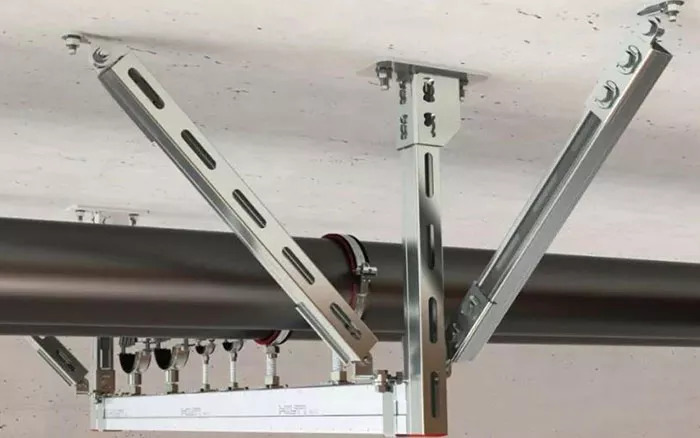
What is the basis for designing seismic supports and hangers?
According to the national standard GB 50981-2014 “Code for Seismic Design of Mechanical and Electrical Engineering in Buildings,” promulgated and implemented by the Ministry of Housing and Urban–Rural Development in 2015, the design and application of seismic supports and hangers are explicitly specified. This standard has been in effect since August 1, 2015, meaning that, from that date onward, seismic supports and hangers must be incorporated into the design of mechanical and electrical systems in new buildings.
What is an earthquake-resistant support and hanger?
Seismic support and hanger systems are support and suspension products designed to bear and provide seismic bracing for mechanical and electrical piping, ductwork, cable trays, and other similar equipment. According to GB 50981–2014 “Code for Seismic Design of Mechanical and Electrical Engineering in Buildings,” a seismic support and hanger system is defined as an earthquake-resistant support facility that is firmly connected to the building structure and primarily bears seismic loads. It consists of anchorage components, reinforcing hangers, seismic connection elements, and seismic diagonal braces.
What are the common types of seismic supports and hangers?
According to GB 50981-2014 Code for Seismic Design of Mechanical and Electrical Engineering in Buildings, an seismic support and hanger system consists of anchorage components, reinforcing hangers, seismic connection components, and seismic bracing. All components comprising the seismic support and hanger system shall be prefabricated, and the design of the connecting fasteners shall facilitate installation.


Lateral Seismic Support
Used to resist lateral horizontal seismic forces.

Vertical Seismic Support
Used to resist longitudinal horizontal seismic forces.
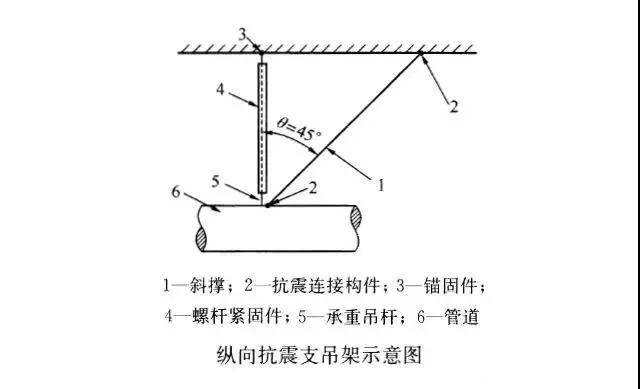
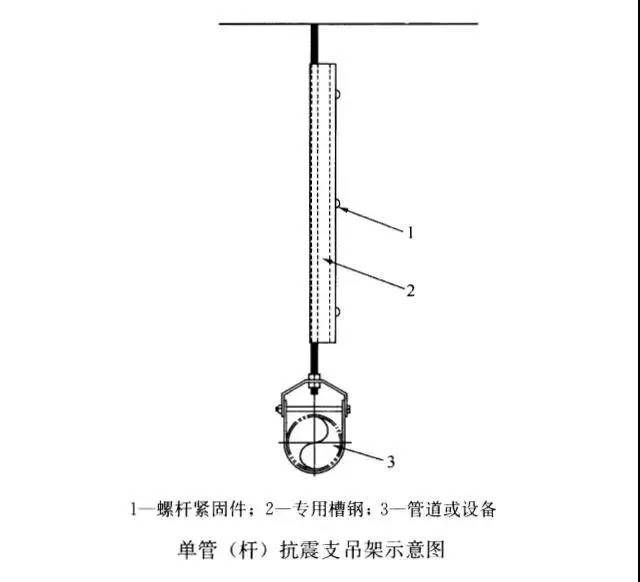
Single-pipe (pole) seismic support and hanger
It is an earthquake-resistant support and hanger system composed of a load-bearing hanger and seismic bracing.
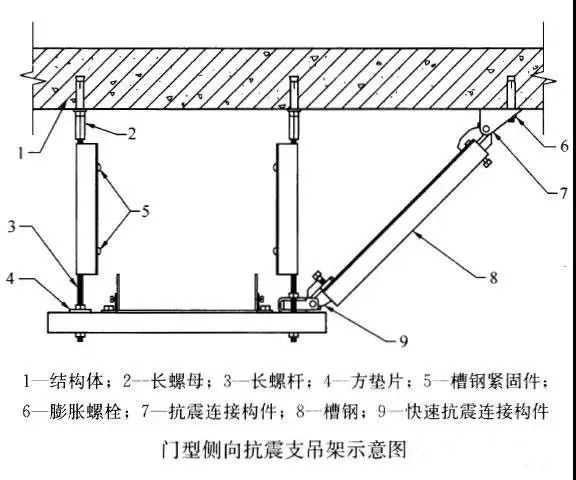
Portal-type seismic support and hanger
An seismic support and hanger system composed of two or more load-bearing hangers, cross beams, and seismic bracing.
Where are seismic supports and hangers required?
According to GB 50981-2014, Code for Seismic Design of Mechanical and Electrical Engineering in Buildings:
Clause 1.0.4 (a mandatory provision) stipulates that mechanical and electrical engineering systems in buildings located in areas with a seismic design intensity of 6 degrees or higher must be designed for earthquake resistance.
The explanatory note for Article 3.1.6 specifies the scope of seismic design requirements:
① Equipment in suspended pipelines with a gravitational force greater than 1.8 kN;
② Domestic water supply and fire protection piping systems with a nominal diameter of DN65 or greater;
③ Duct systems with rectangular cross-sectional areas of 0.38 m² or greater and circular diameters of 0.7 m or greater;
④ For electrical conduits with an inner diameter of 60 mm or greater, as well as cable trays, cable trunking, and busbar trunking with a self-weight of 150 N/m or more.
Clause 3.1.8 stipulates that building mechanical and electrical pipelines passing through the isolation layer shall be connected using flexible joints or other appropriate methods, and seismic supports shall be installed on both sides of the isolation layer.
Clause 4.1.2.1 stipulates that for high-rise buildings in seismic zones of intensity 8 and 9, when the straight-line length of the water supply and drainage risers exceeds 50 m, vibration-resistant measures shall be adopted; when the straight-line length exceeds 100 m, such measures shall be mandatory.
Clause 4.1.2.3 stipulates that horizontal pipelines for indoor water supply, hot water, and fire protection systems with a nominal diameter of DN65 or greater, when supported by hangers, brackets, or saddles, shall be provided with seismic supports as required.
Clause 5.1.2.4 stipulates that piping in boiler rooms, chiller rooms, and heat exchange stations shall be provided with reliable lateral and longitudinal seismic supports. For multiple pipes sharing a common support or for individual pipes with a nominal diameter of 300 mm or greater, it is recommended to use gantry-type seismic supports.
Clause 5.1.3.3 stipulates that ductwork with a rectangular cross-sectional area of 0.38 m² or greater, or with a circular diameter of 0.70 m or greater, may be equipped with seismic supports and hangers.
Clause 5.1.4 (mandatory provision) stipulates that smoke-control and smoke-exhaust ductwork, emergency ventilation ductwork, and associated equipment shall be installed using seismic supports and hangers.
Clause 5.1.5.4 stipulates that air-conditioning units, fans, and other equipment with a gravitational load exceeding 1.8 kN shall not be installed by suspension. When suspension installation is unavoidable, such equipment shall not be positioned directly above areas of human activity or evacuation routes; however, seismic-resistant support and hanger systems must be provided.
Clause 6.1.1 stipulates that gas pipelines with an inner diameter of 25 mm or greater shall be designed for seismic resistance, and the installation of seismic supports and hangers for such pipelines shall comply with the relevant provisions.
Clause 6.2.8 stipulates that, in buildings with a height exceeding 50 m, gas pipelines shall be provided with seismic supports at appropriate intervals in accordance with the building’s seismic design requirements.
Clause 7.1.2 stipulates that electrical conduits with an inner diameter of not less than 60 mm, as well as cable trays, cable trunking, and busway systems with a self-weight of not less than 150 N/m, shall all be provided with seismic design provisions.
Next page
Related News
Exploring the Future Development and Applications of Busbar Trunking Systems
This article explains the importance of busbar trunking systems in modern power systems and their future development trends.
2026-04-10

Hello, how may we assist you?
*Note: Please ensure all information is accurate; we will contact you as soon as possible.
SAF Coolest v1.3.1.1 设置面板 JYOSD-ZUEU-XXZSE-SZV
无数据提示
Sorry, this section is currently being updated. Please stay tuned!
You can view other sections or return.Home