

The Importance of the Data Center Power Supply and Distribution System
Release Date:
2025-08-31
The Importance of the Data Center Power Supply and Distribution System
The quality of power supply in a computer room directly affects the normal and reliable operation of the computer system, as well as the proper functioning of other ancillary facilities within the room. At the same time, the computer room has specific requirements for grounding, lightning protection, and electromagnetic shielding. To ensure the reliable operation of the computer system, it is essential to establish a high-quality, stable, safe, and dependable power supply and distribution system, which includes: Power Distribution and High-voltage power conduit 。 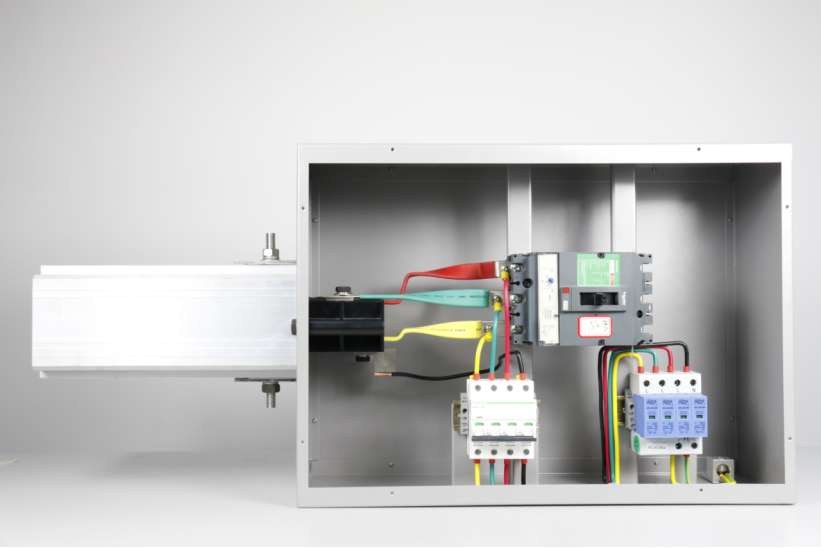
Install one power distribution cabinet and one lighting distribution box in the data center’s power distribution room:
- Power Distribution Cabinet : Responsible for air conditioning, lighting, power outlets within the equipment room, and power control for equipment room expansion and backup.
- Lighting Distribution Box : Responsible for lighting in all areas of the data center
Electrical Component Selection : All air switches and other components shall be qualified, branded, high-quality products (including relays, indicator lights, pushbuttons, etc.). The wiring used in the data center’s power distribution system shall be flame-retardant PVC-insulated conductors, installed within galvanized steel conduit or metallic flexible conduit.
I. Load and Power Supply Incoming Lines
Data center load
- Electricity consumption for computer equipment and air-conditioning equipment: at least 30KW
- Lighting and auxiliary power, as well as power for data center expansion and backup: at least 7KW
Power supply capacity
Power supply for computer equipment, air-conditioning systems, and fresh-air ventilation systems shall be ensured. Switching between utility power and utility power, as well as between utility power and UPS, shall be performed in the distribution room.
- Total Design Capacity : 75 kilowatts
- Three-phase: 50 kW
- Single-phase: 25 kW
Incoming line
Four circuits of five-core VV-ZR series (flame-retardant) cables are routed from the central distribution room on the first floor of the building through separate galvanized steel conduits and then enclosed in metal cable trays to the equipment room’s power distribution room, providing dual-loop low-voltage power supply.
II. Power Distribution Design
UPS power supply
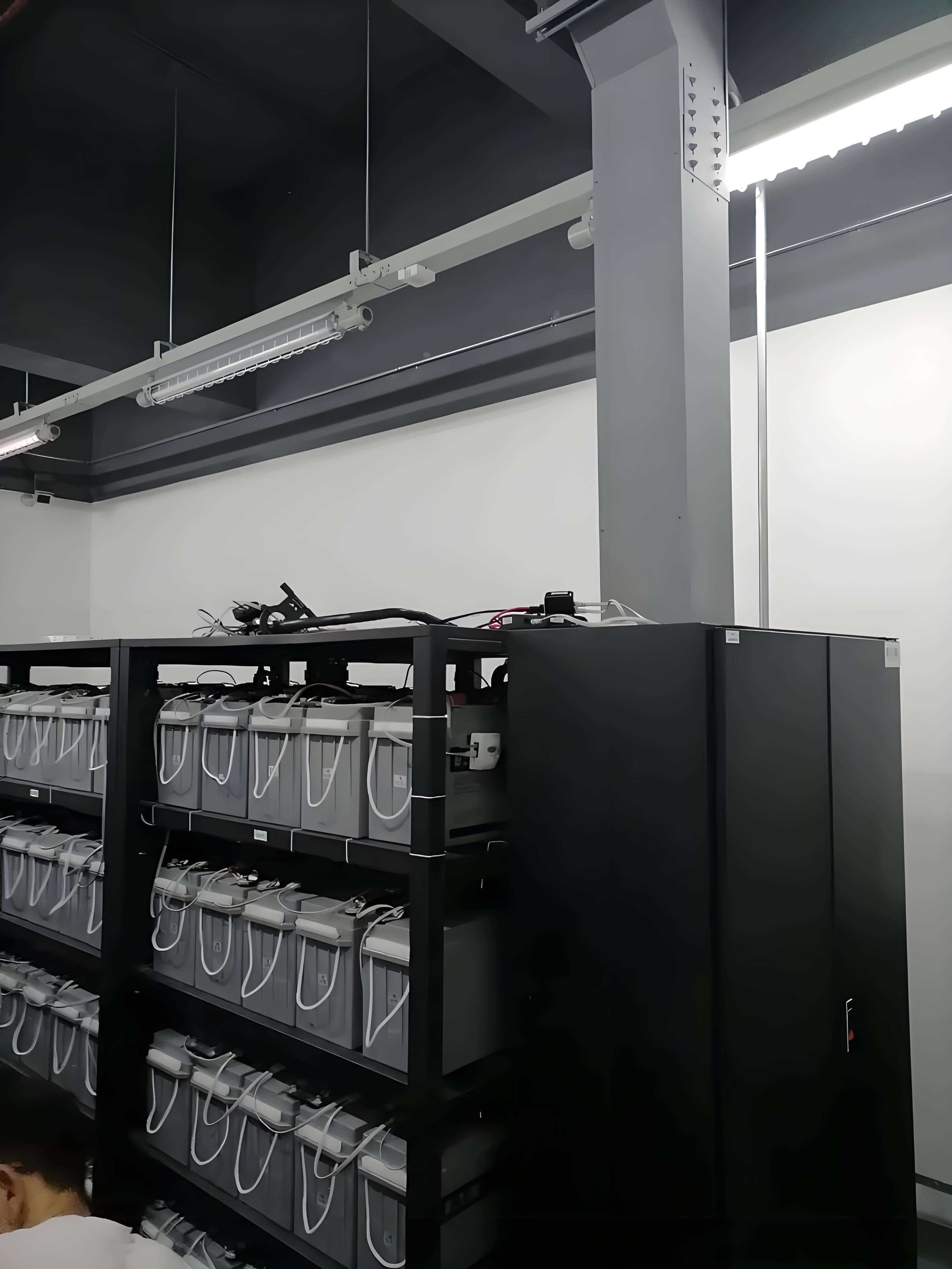
- Procured equipment: 1 unit of 15 kVA UPS (with 4-hour runtime), plus the data center’s existing 2 units of 5 kVA UPS.
- Power supply mode: Normal operation is powered by the utility grid; in the event of a utility failure, power is supplied by the UPS.
- Incoming power source: 380V utility power is directly supplied from the building’s main distribution room to the dedicated distribution cabinet in the equipment room.
- Power Supply Path: The power cables for the computer equipment in the main data center originate from the UPS output distribution cabinet, are routed to the cabinet-specific branch distribution panel, and then supplied to each individual piece of computer equipment.
- Distribution circuits: The UPS output distribution circuits shall be configured in accordance with equipment requirements, with four additional circuits reserved for future expansion.
- Power Supply Assurance: Each cabinet is equipped with dual-circuit power supply to ensure stable power delivery to critical equipment, including servers, storage systems, and core network switches.
- Outlet Type: All power outlets for computers and network equipment shall be flame-retardant and waterproof.
Mains power supply
- Configuration: Design a mains power distribution cabinet, primarily for air-conditioning and lighting distribution.
- Distribution box requirements: a standard distribution box dedicated for the computer room, equipped with ABB low-voltage switches.
- Safety Protection: The cabinet is equipped with a mains backup circuit and surge protective devices.
- Socket configuration:
- Standard power outlet: mounted on the wall
- Pop-up copper socket: installed on an anti-static floor
Total Design Capacity of the Mains Power Section
- Municipal power circuit 3 circuit breaker management: one circuit connected to the UPS, with the other two circuits as backups.
- UPS power distribution design with 8 power supply circuits: 2 incoming power feeds per cabinet.
- Scope of Management: Central equipment such as networks, servers, and storage systems; air-conditioning chillers; all maintenance power supplies within the data center; emergency lighting power supplies; power supplies for other office equipment in the data center; and power supplies for certain surveillance equipment, among others.
- Incoming line requirements: three-phase five-wire system, one power cable.
III. Design of Power Pipeline and Busbar Systems
Pipeline materials
All power cable trays in the equipment room shall adopt:
- Main specification: 200×100 mm galvanized cable tray compliant with the national standard for metal structures
- Auxiliary materials: DG20 metal conduit, DG20 metal flexible conduit, DG20 metal fittings, Type 86 wiring devices, and junction boxes (including low-voltage conduit).
Cable Specifications
Control cable :
-
- Lighting System: Uses flame-retardant 2.5 mm² copper-core cables.
- Servers and other equipment: Use flame-retardant 10 mm² copper-core cables.
- Air-conditioning equipment: uses flame-retardant 16 mm² copper-core cables.
Power cable :
-
- UPS power cable: 1 cable (3×25 mm² + 2×16 mm²)
- Mains power cable: 1 cable (3×35 mm² + 2×16 mm²)
Busbar System Design
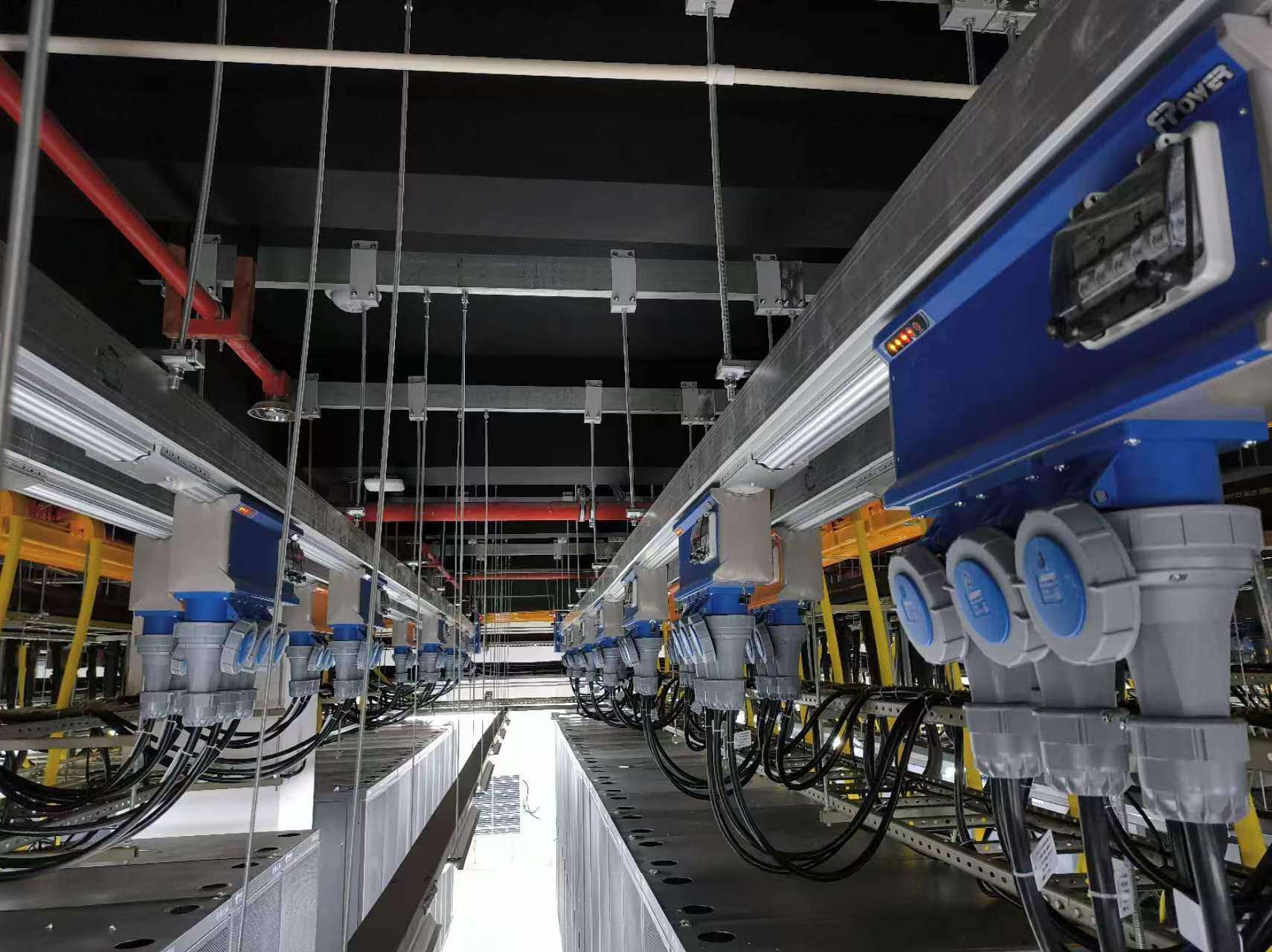
This system adopts a hierarchical busbar architecture to enhance power supply reliability and flexibility:
1. High-capacity busbar (main busbar)
- Specification: Uses an 800A compact insulated busbar trunking system.
- Route: Arranged along the perimeter of the equipment room to form a ring-shaped power supply network.
- Features:
- Rated current: 800 A
- Protection rating: IP54
- Conductor material: electrolytic copper busbar
- Insulating material: Flame-retardant polyester film
- Advantages: Enables centralized power distribution from the switchgear room to each row of server cabinets, reducing cable consumption.
2. Small-capacity busbar (busbar at the row head)
- Specification: Uses a 400A compact insulated busbar trunking system.
- Installation: Mounted at the top of each row of cabinets to provide cabinet-level power distribution.
- Features:
- Rated current: 400 A
- Patch Panel: Each cabinet is equipped with a dedicated patch panel.
- Output circuits: Each junction box provides 16 output circuits.
- Monitoring Function: Built-in power monitoring module for real-time monitoring of electrical parameters.
- Advantages: Supports hot-swapping, facilitating power capacity expansion and adjustment in the cabinet.
Advantages of the Busbar System
- High Reliability : Double-insulation design reduces failure rate by 60% compared with cables.
- Flexible scalability Modular design that supports rapid scaling and upgrades.
- Convenient maintenance : The plug-in box supports hot-swapping, reducing downtime.
- Intelligent Monitoring : Real-time monitoring of parameters such as branch current, voltage, and power factor
Wiring Standards
- Complies with GB 50054-93 “Code for Design of Low-Voltage Power Distribution” and other relevant national and industry standards.
- Power cables and low-voltage cables shall be routed in separate cable trays, with a minimum parallel clearance of 30 cm.
- The neutral conductor and the protective earth conductor shall be laid separately.
- Galvanized cable trays shall be used beneath the anti-static flooring, with branch circuits routed through galvanized steel conduit.
- Provide a 30% design margin for cable trays and galvanized conduits to accommodate future capacity expansion.
- The busbar trunking system is installed using a suspended mounting method at a height of 2.8 meters above the floor to ensure adequate working clearance.
IV. Distribution Cabinet
Distribution Cabinet Structure
- Cable entry method: top-in, bottom-out
- Design requirements: Operation and maintenance shall not interfere with each other; terminal wiring shall ensure equipment safety; the panel-mounted simulation board shall be easy to operate and master, while also preventing misoperation.
Municipal Power Distribution Cabinet Section
- Implemented using a data center-specific distribution box.
- Receive the municipal power supply from the main distribution room, and route it through the main power switch to the branch circuits.
- Design at least 18 circuits:
- Lighting circuits: 6
- Precision air conditioning loop: 1
- Other auxiliary outlet circuits: 5
- Backup circuits: 3
UPS Power Supply Section
- Implemented using a data center-specific distribution box.
- Receive the single-phase power supply delivered by UPS, which is then routed through a 160A main power switch and distributed to the branch circuits.
- Design at least 15 circuits:
- Server circuits: 2
- Surveillance alarm loop: 1
- Switch circuits: 2
- Workstation circuits: 2
- Firefighting circuit: 1
- Backup circuits: 6
V. Conclusion
As the “heart” of a data center’s stable operation, the data center power supply and distribution system is of paramount importance and must be designed and implemented with uncompromising reliability. A scientifically engineered, rationally laid-out, and high-quality power supply and distribution system not only provides continuous, stable power to computing equipment but also effectively mitigates the risks of system outages and data loss caused by power-related issues.
Leveraging years of specialized expertise in the electrical field and strict adherence to relevant national standards and codes, Hubei RuiNeng Electric adopts a high-standard, rigorously controlled design approach—from load calculation and circuit planning to equipment selection—ensuring that data center power supply and distribution systems deliver exceptional reliability, availability, and maintainability. Recognizing the critical importance of stable power for data centers, we leave no detail to chance, providing a robust power infrastructure that underpins our clients’ digital transformation and business growth.
Ensuring greater power stability and enhanced data security—Hubei RuiNeng Electric joins forces with you to build a secure and reliable digital infrastructure.
Related News
Exploring the Future Development and Applications of Busbar Trunking Systems
This article explains the importance of busbar trunking systems in modern power systems and their future development trends.
2026-04-10

Hello, how may we assist you?
*Note: Please ensure all information is accurate; we will contact you as soon as possible.
SAF Coolest v1.3.1.1 设置面板 JYOSD-ZUEU-XXZSE-SZV
无数据提示
Sorry, this section is currently being updated. Please stay tuned!
You can view other sections or return.Home